
Recall Bias: Memory Distortion and Temporal Telescoping in Surveys
Recall bias distorts survey data through memory decay, telescoping, and reconstruction. Learn how memory works against accurate self-report, when recall bias matters most, and design strategies to reduce it.
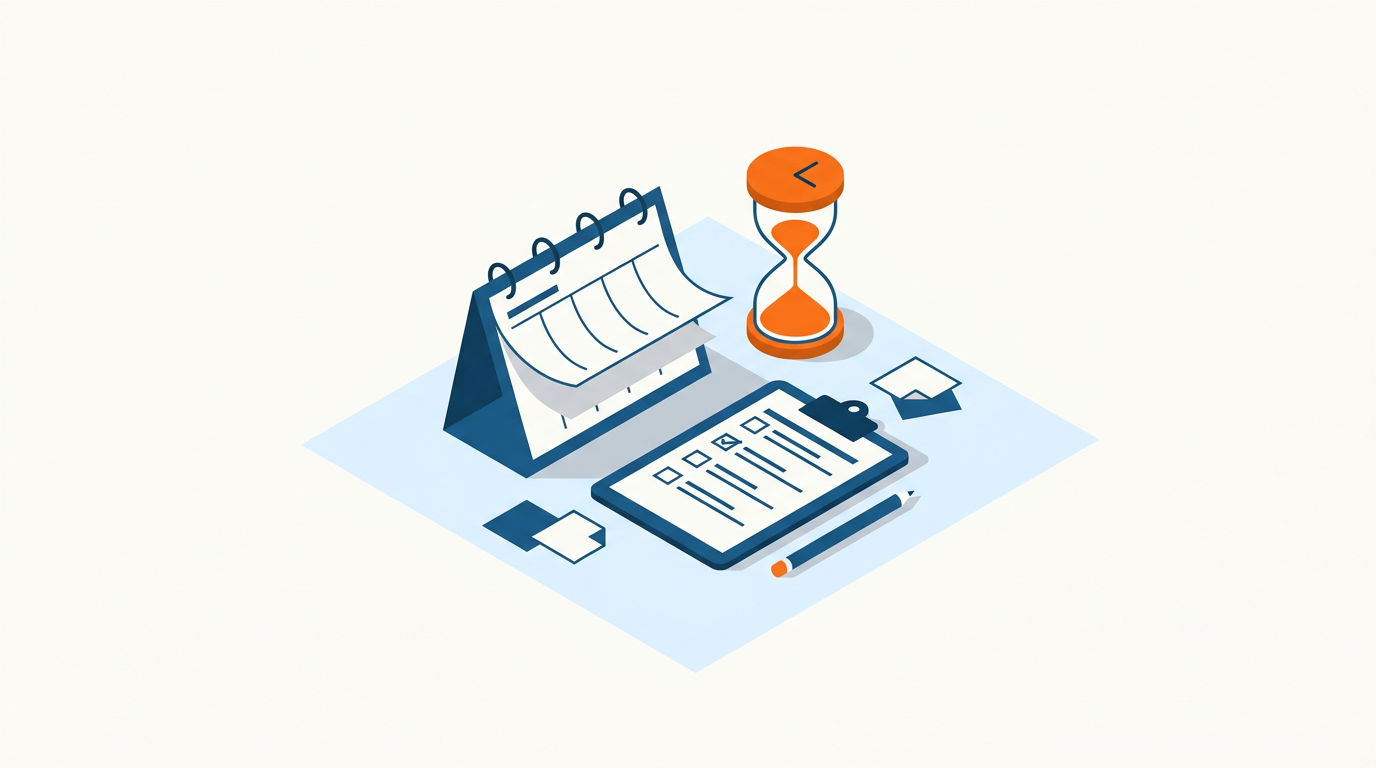
Respondents do not remember what happened. They reconstruct what probably happened, using fragments of actual memory filled in by expectations, current mood, and what makes narrative sense. Every survey question that asks about the past is asking respondents to perform this reconstruction under time pressure.
Memory is not a recording—it's a reconstructive process that is systematically biased in predictable directions. Events are compressed, displaced in time, filtered through current beliefs, and shaped by the way the question is asked. When a survey asks "How many times in the past month did you exercise?" the respondent is not retrieving a stored count. They are estimating, inferring, and constructing a plausible number. The number they report feels accurate. It usually isn't.
This means retrospective survey data is never a direct measurement of past behavior or experience. It's a measurement of what respondents believe happened—filtered through the distortions of reconstructive memory. Understanding these distortions is essential for designing surveys that minimize their impact and interpreting data that accounts for their presence.
TL;DR:
- Memory is reconstructive, not reproductive. Respondents generate plausible answers, not accurate retrievals.
- Temporal telescoping displaces events in time. Forward telescoping (distant events seem recent) inflates frequency counts for bounded reference periods.
- Frequency estimation is rarely based on actual counting. Respondents use rate-based estimation, availability heuristics, and schema-based inference.
- Shorter reference periods produce more accurate recall but may miss infrequent events. Match the period to the behavior's base rate.
- Cued recall (providing specific prompts) outperforms free recall (open-ended "how often" questions) for most behavioral measures.
- Diary methods avoid recall bias entirely but impose higher respondent burden.
How Memory Distorts Survey Responses
The Reconstruction Process
When asked to recall a past event or behavior, respondents go through a process that cognitive psychologists describe in stages:
- Comprehension: Understanding what the question is asking (which is itself influenced by question wording and context)
- Retrieval: Searching memory for relevant information
- Judgment: Evaluating and combining retrieved information into an answer
- Response: Mapping the judgment onto the available response options
Bias can enter at every stage. But the retrieval and judgment stages are where recall bias primarily operates.
During retrieval, memory doesn't return complete, accurate records. It returns fragments—a vivid detail from one instance, a general impression of frequency, an emotional association. The respondent then fills gaps using:
- Schemas: General knowledge about what "usually" happens ("I usually exercise 3 times a week, so probably 12 times this month")
- Current state: Present mood, beliefs, and attitudes color which memories are accessible and how they are interpreted
- Question context: The way a question is framed activates specific memories and suppresses others
Temporal Telescoping
Temporal telescoping is one of the most well-documented recall distortions. It refers to the systematic displacement of events in time.
Forward telescoping makes events seem more recent than they were. A doctor's visit that happened 4 months ago is remembered as happening 2 months ago. This is the more common direction and has a consistent effect: it inflates the number of events respondents report within a bounded reference period ("in the past 3 months").
Backward telescoping makes events seem more distant than they were. This is less common but can cause underreporting of recent events.
The magnitude of telescoping depends on the reference period length and the salience of the event:
| Reference period | Telescoping direction | Typical effect |
|---|---|---|
| Last week | Minimal | Events from previous weeks may intrude |
| Last month | Moderate forward | Events from 2-3 months ago included |
| Last 6 months | Substantial forward | Events from 8-12 months ago included |
| Last year | Large forward | Significant inflation of event counts |
The practical implication: longer reference periods produce larger telescoping effects and less accurate frequency estimates.
Frequency Estimation Strategies
When asked "how many times," respondents rarely count individual episodes. Instead, they use estimation strategies:
Rate-based estimation: "I go to the gym about 3 times a week, so in the past month that's about 12." This strategy is efficient but breaks down for irregular behaviors—and ignores weeks when routine was disrupted.
Availability heuristic: "How easily can I think of instances?" Events that are more memorable (recent, vivid, emotional) are weighted more heavily, leading to overestimation of memorable behaviors and underestimation of routine ones.
Anchoring on response options: If the response scale offers categories like "0, 1-2, 3-5, 6-10, 11+", respondents interpret the scale midpoint as the "typical" value and anchor toward it. Response options aren't just measurement tools—they communicate the researcher's expectations about what's normal.
Decomposition: "How often per week? Times 4 for a month." This is more accurate than holistic estimation but requires the respondent to spontaneously adopt this strategy.
Mood-Congruent Recall
Current emotional state selectively activates mood-consistent memories. A respondent who is currently stressed will more easily recall stressful past events, leading to overreporting of negative experiences. A respondent in a positive mood will more easily recall positive events.
This is particularly problematic for:
- Health surveys conducted during illness (overreporting of symptoms)
- Employee satisfaction surveys conducted during workplace crises
- Any retrospective measure where current state differs from past state
Social Desirability Filtering
Memory reconstruction is not immune to social desirability bias. Respondents unconsciously adjust their memories to be more socially acceptable. This is not deliberate lying—it's a genuine distortion in what respondents believe they remember.
Socially desirable behaviors (exercising, eating healthy, voting) tend to be overreported. Socially undesirable behaviors (drinking, smoking, risky activities) tend to be underreported. The distortion operates at the memory reconstruction level, not just the reporting level—which is why confidentiality assurances alone don't fully eliminate it.
When Recall Bias Matters Most
Not all survey questions are equally vulnerable to recall bias. Some are sitting ducks. The risk depends on what's being recalled and over what timeframe.
High-Risk Recall Tasks
Infrequent or irregular events. How many times did you visit a doctor in the past year? Infrequent events are harder to date accurately (more telescoping) and harder to enumerate (more estimation error).
Emotionally charged experiences. Past trauma, conflict, or peak experiences are subject to both mood-congruent distortion and motivated reconstruction. The emotional intensity makes memories vivid but not necessarily accurate.
Stigmatized behaviors. Substance use, sexual behavior, financial difficulties. Social desirability filtering is strongest for these topics, and the distortion is compounded by reconstructive bias.
Long reference periods. Any question about "the past year" or "in your lifetime" is asking respondents to do something human memory simply can't do—enumerate accurately over that span.
Lower-Risk Recall Tasks
Routine daily behaviors. Respondents have well-established schemas for routine behaviors, and rate-based estimation is relatively accurate for regular patterns.
Highly salient life events. Marriage, graduation, job changes. These are accurately dated and reliably recalled because they serve as temporal landmarks in autobiographical memory.
Very recent events. "Yesterday" and "this week" recall is substantially more accurate than "last month" recall for most behaviors.
Binary events. "Have you ever had surgery?" is easier and more accurate than "How many times have you had surgery?" Recognition is more robust than enumeration.
Design Strategies to Reduce Recall Bias
1. Shorten the Reference Period
The single most effective strategy. A shorter reference period reduces telescoping, improves enumeration accuracy, and limits the scope of reconstruction.
| Behavior type | Recommended reference period |
|---|---|
| Daily behaviors (meals, exercise, screen time) | Yesterday or last 7 days |
| Weekly behaviors (shopping, socializing) | Last 2-4 weeks |
| Monthly behaviors (doctor visits, travel) | Last 1-3 months |
| Rare events (surgery, accidents) | Last 12 months or lifetime |
The trade-off: shorter periods may miss infrequent behaviors entirely. A respondent who exercises twice a month might report zero for "last week." Match the reference period to the behavior's expected frequency.
2. Use Bounded Recall
Bounded recall provides a temporal anchor to reduce telescoping. Instead of "in the past month," reference a specific landmark:
Unbounded: "How many times did you visit a doctor in the past 6 months?"
Bounded: "Since September 1st, how many times did you visit a doctor?"
Landmark-bounded: "Since the start of the academic semester, how many times did you visit a doctor?"
Landmarks that are personally meaningful to the respondent (start of a job, a holiday, an academic term) are more effective than arbitrary calendar dates.
3. Provide Behavioral Cues
Instead of asking respondents to freely recall events, provide cues that trigger specific memories:
Free recall (less accurate): "How many times did you exercise in the past month?"
Cued recall (more accurate): "In the past month, how many times did you: go for a run or jog? Attend a gym or fitness class? Play a sport? Take a walk of 30 minutes or more?"
Decomposing the behavior into specific subtypes activates more specific memory traces and reduces reliance on schema-based estimation.
If you're decomposing recall questions into cued subtypes, survey tools that support conditional follow-ups and branching make these multi-part designs easier to build and maintain. See how Lensym handles complex question flows →
4. Offer Concrete Frequency Categories
Open-ended frequency questions ("How many times?") force respondents into the estimation strategies described above. Providing categories can guide more accurate reporting, but the categories must be carefully designed:
Poorly designed categories:
- Never / Rarely / Sometimes / Often / Always
These are ambiguous. "Sometimes" means different things to different respondents.
Better designed categories:
- 0 times / 1-2 times / 3-5 times / 6-10 times / More than 10 times
These are concrete, but the range communicates expectations. Starting from 0 and ending at "more than 10" signals that all frequencies in that range are normal.
5. Consider Diary Methods
For behaviors where recall bias is a primary concern, real-time or near-real-time data collection avoids the problem entirely:
Daily diaries: Respondents record behaviors each day for a defined period. This eliminates telescoping and frequency estimation but imposes substantial respondent burden. Survey fatigue is a real risk with diary studies.
Experience sampling: Respondents are prompted at random intervals to report current behavior or state. This captures real-time data without relying on retrospective recall.
Event-contingent recording: Respondents log specific events as they occur (e.g., logging each headache episode). This is accurate for the logged events but depends on compliance.
These methods trade recall bias for respondent burden. They work for small, intensive studies—but they don't scale.
6. Use Recognition Rather Than Free Recall
When possible, present specific items for recognition rather than asking respondents to generate them from memory:
Free recall: "What medications are you currently taking?"
Recognition: "Are you currently taking any of the following medications? [list]"
Recognition is easier and more complete than free recall. Respondents may forget to mention a medication in free recall but will recognize it on a list. The limitation—your list must be comprehensive enough to capture relevant items.
Interpreting Recall-Based Data
Even with optimal design, retrospective survey data contains recall distortion. Interpretation should account for this:
Frequency estimates are likely inflated for longer reference periods due to telescoping. Treat them as upper bounds rather than precise counts.
Socially undesirable behaviors are likely underestimated. Apply appropriate skepticism to self-reported rates of sensitive behaviors.
Group comparisons may be less affected than absolute estimates. If recall bias operates similarly across groups, between-group differences may be valid even if absolute levels are distorted. But if groups differ in factors that affect recall (emotional state, time since event, social desirability pressure), group comparisons are also compromised.
Trends over time require consistent methodology. If you change reference periods, question wording, or response categories between survey waves, apparent trends may reflect methodological changes rather than actual changes in behavior.
Frequently Asked Questions
Can respondents be trained to recall more accurately?
Partially. Providing recall aids (calendars, instructions to think sequentially through the reference period) can improve accuracy. But the fundamental limitations of reconstructive memory can't be overcome through instructions alone.
Is forward or backward telescoping more common?
Forward telescoping (distant events seem recent) is substantially more common than backward telescoping. This means retrospective frequency counts are typically inflated rather than deflated.
Do demographic factors affect recall accuracy?
Yes. Age, education, and cognitive ability all influence recall accuracy. Older respondents typically show more recall difficulty for specific dates and frequencies. Higher education and cognitive ability are associated with more accurate temporal dating but not necessarily more accurate frequency estimation.
Should I validate self-reported recall against objective records?
When possible, yes. Comparing self-reported doctor visits to medical records, self-reported purchases to transaction data, or self-reported voting to voter rolls can quantify recall bias in your specific context. This validation data also allows calibration of self-reported estimates.
Designing surveys that minimize memory distortion?
Get Started Free | See Features | Read the Bias Guide
Part of the Response Bias Series:
- Types of Survey Bias: 12 Biases That Threaten Your Data
- Social Desirability Bias: Measurement, Detection, and Mitigation
- Acquiescence Bias: The Psychology of Agreement Response Tendency
Related Reading:
- Survey Question Design: How to Write Questions That Get Honest Answers
- How to Reduce Bias in Surveys: A Practical Framework
- Survey Measurement Error: Types, Examples, and How to Reduce It
- Survey Fatigue: What Causes It and How to Prevent It
Recall bias in survey methodology has been studied since Sudman and Bradburn (1973). Key references include Tourangeau, Rips, and Rasinski (2000), The Psychology of Survey Response, and Bradburn, Rips, and Shevell (1987), "Answering autobiographical questions: The impact of memory and inference on surveys." Temporal telescoping research is reviewed in Huttenlocher, Hedges, and Prohaska (1988).
On this page
Continue Reading
More articles you might find interesting
Acquiescence Bias: What It Is, Examples & How to Reduce
Acquiescence bias is the tendency to agree regardless of content. Real survey examples, why it happens, and the methods that reliably reduce it.

Anonymous Surveys and GDPR: What Researchers Must Document
GDPR's definition of anonymity is strict. Requirements for true anonymization, when pseudonymization suffices, and documentation obligations for each.
Central Tendency Bias: What It Is, Examples & How to Prevent
Central tendency bias is when respondents cluster on middle scale options. Examples, why it happens on Likert scales, and how to prevent it.