
Survey Consent Under GDPR: What Researchers Need to Know
GDPR legal bases for survey data: when consent is required, when other bases apply, and what "valid consent" entails in research contexts and documentation.
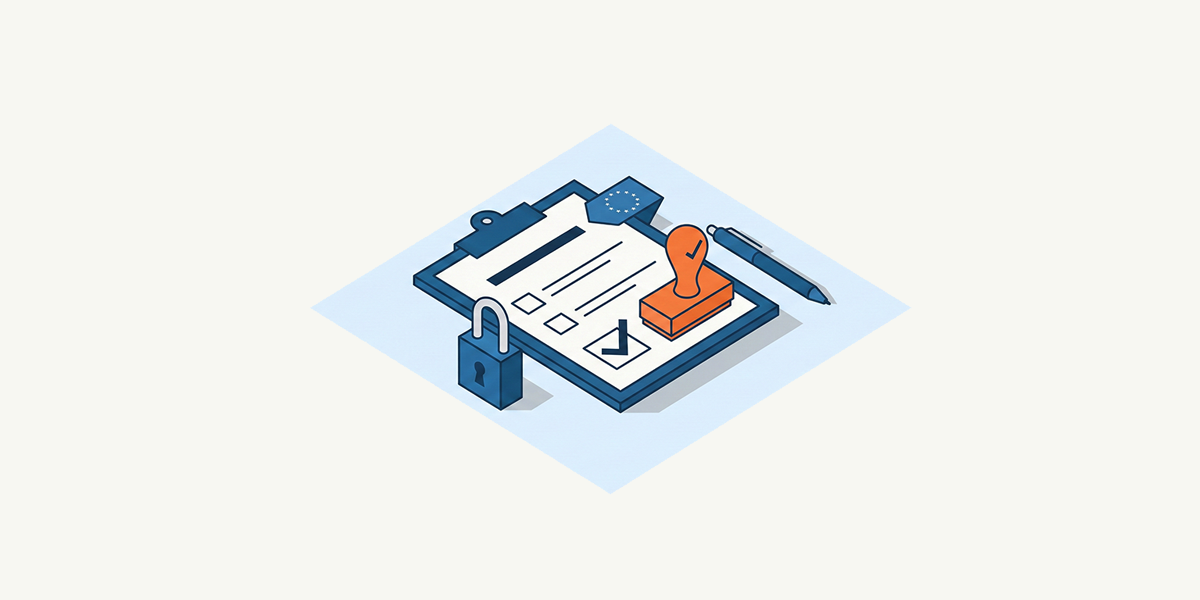
GDPR doesn't require consent for every survey. It requires a lawful basis for processing personal data. Consent is one of six options, and it's not always the best one.
The most common GDPR mistake in survey research is assuming you always need explicit consent. You might. But depending on your context, legitimate interest, contractual necessity, or the research exemption might be more appropriate, and impose fewer constraints on your survey design.
This matters because GDPR consent has specific requirements that affect how you can use the data. Once you've collected data under consent, respondents can withdraw that consent at any time, and you must be able to delete their data on request. If you chose consent as your legal basis without understanding these implications, you may have compliance obligations you didn't plan for.
This guide explains when consent is required for survey research, what makes GDPR consent valid, and when alternative legal bases are more appropriate.
TL;DR:
- GDPR requires a "lawful basis" for processing personal data, not specifically consent. There are six legal bases, and the right one depends on your context.
- Consent is best when: You're processing sensitive data, respondents have a genuine choice, and you can honor withdrawal requests.
- Legitimate interest is often better for: Customer feedback, employee surveys (with caveats), and market research where you can demonstrate a balancing test.
- Valid GDPR consent must be: Freely given, specific, informed, unambiguous, and documented. Pre-ticked boxes don't count.
- For anonymous surveys: If data is truly anonymous (no way to identify individuals), GDPR doesn't apply. But "anonymous" has a high bar.
- Always provide a privacy notice. Regardless of legal basis, respondents must know who's collecting data, why, and what their rights are.
→ Build GDPR-Compliant Surveys with Lensym
When GDPR Applies to Surveys
GDPR applies whenever you process personal data of individuals in the EU/EEA, regardless of where your organization is based.
What Counts as Personal Data in Surveys?
Any information that can identify an individual, directly or indirectly:
| Data Type | Personal Data? | Notes |
|---|---|---|
| Name, email | Yes (directly identifying) | Obviously personal |
| IP address | Yes (indirectly identifying) | Even if you don't store it intentionally, your platform might |
| Free-text responses | Possibly | If someone mentions their name, company, or unique circumstances |
| Demographics (age + location + role) | Possibly | Combinations can be identifying in small populations |
| Aggregated statistics | No | If truly aggregated and individuals can't be re-identified |
| Fully anonymous responses | No | But "fully anonymous" has a high bar (see below) |
The Anonymity Question
If your survey data is truly anonymous (meaning no one, including you, can identify individual respondents), GDPR doesn't apply. But GDPR Recital 26 defines anonymous data narrowly: all "means reasonably likely to be used" to identify an individual must be considered.
What this means in practice:
- Not anonymous: Survey with email collection, even if you "plan to delete" emails later
- Not anonymous: Survey linked to user accounts, even without names
- Not anonymous: Small-population survey (e.g., 5 employees in a department) where responses + demographics could identify someone
- Potentially anonymous: Online survey with no account linking, no IP logging, no metadata collection, and sufficiently large population
For detailed guidance on achieving genuine anonymity, see our guide to anonymous surveys and GDPR.
The Six Legal Bases for Survey Data
GDPR Article 6 provides six legal bases for processing personal data. For surveys, three are most relevant:
1. Consent (Article 6(1)(a))
When to use it: When you want the clearest legal basis and respondents have genuine freedom to participate or not.
Requirements:
- Freely given (no penalty for refusal)
- Specific (consent to this survey for this purpose)
- Informed (respondent understands what they're consenting to)
- Unambiguous (clear affirmative action; no pre-ticked boxes)
- Withdrawable (respondent can revoke consent at any time)
Best for:
- Academic research with identifiable data
- Health or wellbeing surveys (sensitive data under Article 9)
- Marketing surveys where participation is entirely voluntary
- Surveys collecting data beyond what's needed for the existing relationship
Drawbacks:
- Withdrawal rights mean you might lose data mid-study
- Must maintain records of consent
- Consent fatigue (people click through without reading)
2. Legitimate Interest (Article 6(1)(f))
When to use it: When you have a legitimate business reason for the survey, and the respondent's rights don't override that interest.
Requirements:
- Identify the legitimate interest (e.g., improving customer service)
- Demonstrate necessity (survey is necessary to achieve the interest)
- Conduct a balancing test (your interest vs respondent's privacy rights)
- Document the assessment
Best for:
- Customer satisfaction surveys (you have a legitimate interest in understanding customer experience)
- Employee engagement surveys (organizational improvement is a legitimate interest)
- Product feedback surveys (improving products serves both you and customers)
- Market research among existing customers
Drawbacks:
- Requires a documented balancing test
- Respondents have the right to object
- Doesn't work for sensitive data (need consent or another Article 9 basis)
- Supervisory authorities may disagree with your assessment
3. Research Purposes (Article 89 Derogations)
Important clarification: Article 89 is not a standalone legal basis for processing. You still need a lawful basis under Article 6 (and Article 9 for special category data). What Article 89 provides is derogations—limited exemptions from certain data subject rights (like erasure) when processing for research purposes with appropriate safeguards.
When Article 89 helps: For scientific, historical, or statistical research purposes, with appropriate safeguards in place.
What it provides:
- Potential exemption from the right to erasure (Article 17) if deletion would seriously impair research objectives
- Potential exemption from the right to restriction (Article 18) in similar circumstances
- Potential broader compatibility for secondary research use under Article 5(1)(b)
- Requirements vary by EU member state implementing legislation
Requirements:
- A valid lawful basis under Article 6 is still required (typically consent or legitimate interest for research)
- Appropriate safeguards must be in place (pseudonymization, data minimization)
- Research purposes must be genuine, not a label for commercial activity
- Compliance with national-level research data protection laws (which vary significantly)
Best for:
- Academic research requiring data retention beyond the original study
- Longitudinal research where deletion requests would impair study integrity
- Statistical analysis for public-interest purposes
Important limitations:
- Does not exempt you from needing a lawful basis—only from certain data subject rights
- Not available for commercial research disguised as academic
- Requirements and scope vary significantly by EU member state
- Safeguards must be implemented, not just claimed
Quick Decision Guide
| Survey Type | Recommended Legal Basis | Why |
|---|---|---|
| Customer feedback (existing customers) | Legitimate interest | You have a relationship and a clear business reason |
| Academic research (identifiable) | Consent (+ Article 89 derogations where applicable) | Ethical standards typically require consent; Article 89 may exempt from certain deletion requests |
| Employee survey | Legitimate interest (carefully!) | Consent may not be "freely given" due to power imbalance |
| Marketing survey (new prospects) | Consent | No existing relationship to ground legitimate interest |
| Health/sensitive data | Explicit consent (Article 9) | Required for special category data |
| Anonymous survey (truly anonymous) | N/A (GDPR doesn't apply) | But verify anonymity is genuine |
What Makes Consent Valid Under GDPR
If you choose consent as your legal basis, GDPR sets a high bar. Here's what valid consent looks like in practice.
Freely Given
The respondent must have genuine choice. No penalties for not participating. No "complete this survey to continue using the service." No mandatory surveys from employers where refusal could have career consequences.
The power imbalance test: When there's a significant power imbalance (employer-employee, service provider-customer with no alternatives), consent may not be freely given. This is why employee surveys often rely on legitimate interest rather than consent.
Specific
Consent must be for a specific purpose. "We'll use your data to improve our services" is too vague. "We'll use your survey responses to evaluate and improve our customer support processes" is specific.
If you want to use survey data for multiple purposes (improvement AND marketing AND research), you need separate consent for each purpose. Bundled consent ("by completing this survey, you agree to all of the above") doesn't meet the specificity requirement.
Informed
Respondents must understand what they're consenting to before they consent. This means providing, at minimum:
- Who is collecting the data (organization name and contact)
- What data is being collected
- Why (specific purpose)
- How long data will be retained
- Who will have access to it
- Their rights (access, rectification, erasure, portability, objection)
- How to withdraw consent
- Whether data will be transferred outside the EU/EEA
This is your privacy notice, and it must be accessible before the respondent starts the survey.
Unambiguous
Consent requires an affirmative action. The respondent must actively do something to indicate consent.
Valid:
- Ticking an unchecked box ("I consent to...")
- Clicking "I agree and start survey"
- Signing a consent form
Not valid:
- Pre-ticked checkbox
- "By continuing, you agree..." (implied consent through inaction)
- Silence or inactivity
Documented
You must be able to prove consent was given. Record:
- Who consented (identifier)
- When (timestamp)
- What they were told (version of privacy notice)
- How they consented (mechanism)
If a respondent or supervisory authority asks, you need to produce this evidence.
The Privacy Notice: Required Regardless of Legal Basis
Whether you rely on consent, legitimate interest, or the research exemption, GDPR Articles 13 and 14 require you to inform respondents about data processing.
What to Include
Essential elements:
- Identity and contact details of the data controller
- Purpose of data collection (specific, not vague)
- Legal basis you're relying on
- Categories of data being collected
- Retention period (how long you'll keep the data)
- Recipients (who will access the data)
- Rights of the data subject (access, rectification, erasure, restriction, portability, objection)
- How to exercise rights (contact details for requests)
- Right to lodge a complaint with a supervisory authority
- Whether data is transferred outside the EU/EEA (and safeguards)
Where to Put It
Best practice: Link to the full privacy notice on the survey introduction page. Don't bury it in the survey itself or hide it behind multiple clicks.
Example survey intro:
"This survey asks about your experience with [product/service]. It takes approximately 5 minutes.
Your responses will be used to improve our customer support processes. Data is stored securely and retained for 12 months.
[Read our full survey privacy notice →]
By clicking 'Start Survey,' you consent to the processing of your responses as described in the privacy notice."
Keep It Readable
Privacy notices don't have to be legal documents. GDPR Recital 58 says information should be provided in "clear and plain language." Write for your respondents, not for lawyers.
Special Categories: Sensitive Data
GDPR Article 9 restricts processing of "special category" data, which includes:
- Racial or ethnic origin
- Political opinions
- Religious or philosophical beliefs
- Trade union membership
- Genetic or biometric data
- Health data
- Sexual orientation
If your survey collects any of these, you need explicit consent (not just regular consent) plus an Article 9 condition. "Explicit" means the consent specifically mentions the sensitive data categories being collected and the respondent explicitly agrees to their processing.
Practical implication: If your employee survey asks about disability status, ethnic background, or religious practices, you need a separate explicit consent mechanism for those questions, even if the rest of the survey relies on legitimate interest.
Common Mistakes
Mistake 1: Pre-Ticked Consent Boxes
Pre-ticked boxes are not valid consent under GDPR. The Planet49 ruling (CJEU, C-673/17) confirmed this explicitly. If your survey tool defaults consent to "checked," it needs to change.
Mistake 2: Bundled Consent
"By completing this survey, you agree to receive marketing emails." This bundles survey participation consent with marketing consent. GDPR requires separate consent for separate purposes.
Mistake 3: No Withdrawal Mechanism
If consent is your legal basis, respondents must be able to withdraw it. This means you need a way for them to request data deletion after submission. "We can't delete your response because we don't know which one is yours" only works if the survey is truly anonymous (in which case consent wasn't needed anyway).
Mistake 4: Assuming Employee Surveys Are Consent-Based
Employees may not feel free to refuse a survey from their employer. If there's any implicit pressure (even unintentional), consent may not be freely given. Legitimate interest is often a more defensible basis for employee surveys, provided you conduct the balancing test.
Mistake 5: Ignoring Data Retention
GDPR requires data minimization, including time limits. "We'll keep survey data indefinitely" is not compliant. Define a retention period based on your stated purpose. When the purpose is fulfilled, delete the data or anonymize it.
Practical Implementation
For Customer Feedback Surveys
Recommended basis: Legitimate interest.
Implementation:
- Document your legitimate interest assessment (template below)
- Include a brief privacy notice on the survey introduction page
- Provide an opt-out mechanism (respondents can object to processing)
- Set a retention period (e.g., 24 months)
- Don't use survey data for purposes beyond what you stated
For Academic Research
Recommended basis: Consent (often required by IRB/ethics committees anyway).
Implementation:
- Create a detailed informed consent form
- Include all required privacy notice elements
- Get affirmative consent before the survey starts
- Provide withdrawal mechanism with clear instructions
- Follow your institution's research data management policies
For Employee Surveys
Recommended basis: Legitimate interest (with careful balancing test) or consent (if participation is genuinely voluntary).
Implementation:
- Document the legitimate interest and balancing test
- Communicate clearly that participation is voluntary with no repercussions
- Use a third-party survey tool to increase trust in anonymity
- Minimize data collection (don't ask for identifying information unless necessary)
- Report only aggregated results; suppress groups smaller than 5-10 people
Legitimate Interest Assessment Template
For surveys relying on legitimate interest, document:
- What is the legitimate interest? (e.g., "Understanding customer satisfaction to improve service delivery")
- Is the survey necessary for this interest? (e.g., "Yes, we cannot assess satisfaction without asking customers directly")
- What are the risks to respondents? (e.g., "Minimal, we collect only satisfaction data, no sensitive categories")
- How are risks mitigated? (e.g., "Data is pseudonymized, stored securely, retained for 12 months only, and used only for service improvement")
- Does the respondent's interest override yours? (e.g., "No, the data is non-sensitive, processing is minimal, and respondents benefit from improved services")
The Bottom Line
GDPR compliance for surveys isn't about checking a consent box. It's about:
- Choosing the right legal basis for your context (consent, legitimate interest, or research exemption)
- Meeting the requirements of whichever basis you choose
- Informing respondents clearly about what you're doing with their data
- Minimizing data collection to what's necessary for your stated purpose
- Planning for data lifecycle including retention, access requests, and deletion
The most common mistake is over-reliance on consent when legitimate interest would be more appropriate, or under-reliance on proper consent mechanisms when consent is genuinely needed.
When in doubt, consult your data protection officer or legal counsel. GDPR interpretation varies by jurisdiction and supervisory authority.
Building GDPR-compliant surveys from the ground up?
Lensym is built with EU data residency, no tracking cookies, built-in anonymization options, and consent management: GDPR compliance that's native, not retrofitted.
Related Reading:
- GDPR-Compliant Surveys: A Practical Guide for Researchers
- European Survey Infrastructure: Data Sovereignty for University Research
- Anonymous Surveys and GDPR: What Researchers Must Document
- Survey Data Quality: A Practical Checklist Before You Analyze
This guide provides general information about GDPR compliance for survey research. It is not legal advice. Consult a qualified data protection professional for guidance specific to your situation and jurisdiction.
On this page
Continue Reading
More articles you might find interesting

Acquiescence Bias: What It Is, Examples & How to Reduce
Acquiescence bias is the tendency to agree regardless of content. Real survey examples, why it happens, and the methods that reliably reduce it.

Anonymous Surveys and GDPR: What Researchers Must Document
GDPR's definition of anonymity is strict. Requirements for true anonymization, when pseudonymization suffices, and documentation obligations for each.
Central Tendency Bias: What It Is, Examples & How to Prevent
Central tendency bias is when respondents cluster on middle scale options. Examples, why it happens on Likert scales, and how to prevent it.