
Survey Mode Effects: Comparing Online, Telephone, and Paper Administration
Survey mode affects response rates, data quality, and response patterns. Compare online, telephone, paper, and mixed-mode designs with evidence on when each mode works best and how to handle mode effects in analysis.
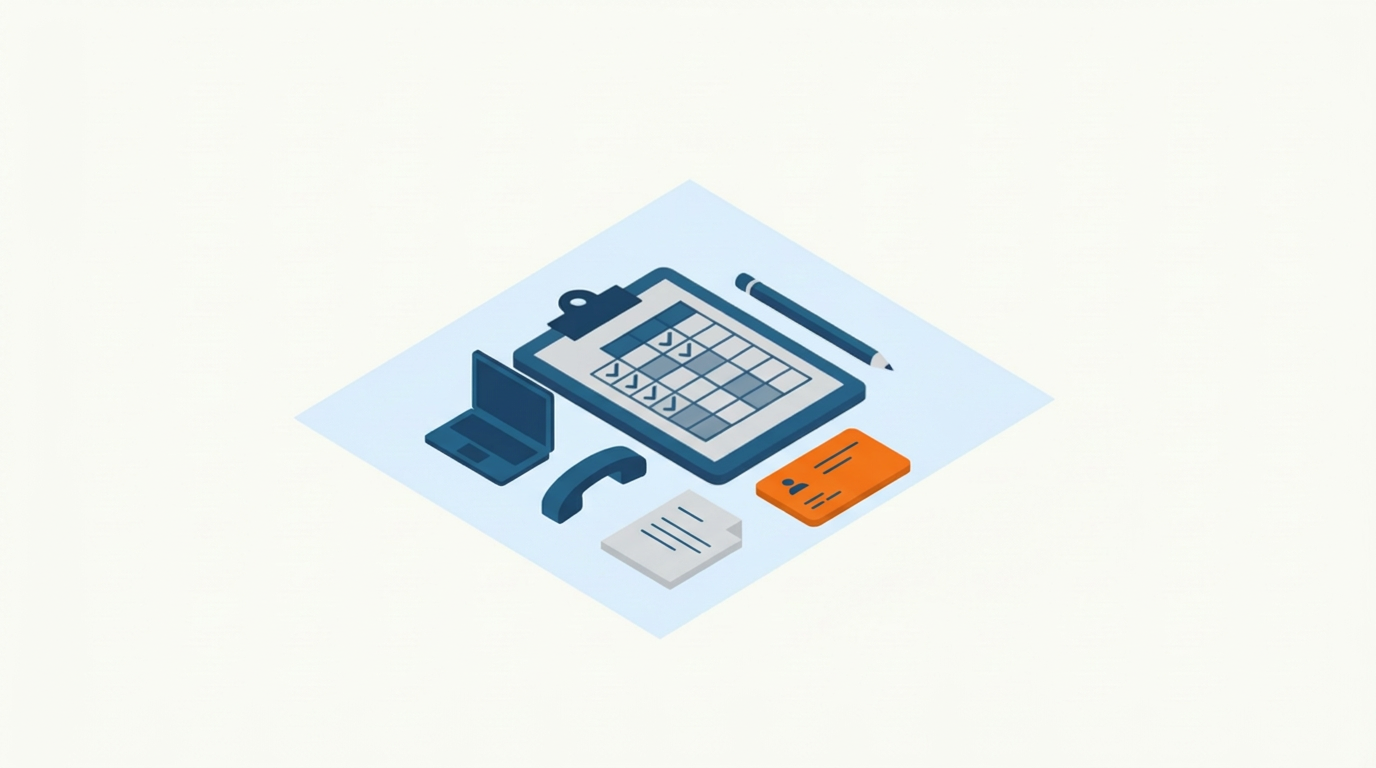
The way you administer a survey is not a neutral delivery mechanism. It is a variable that shapes your data. The same question produces systematically different answers depending on whether it is read aloud by an interviewer, displayed on a screen, or printed on paper. Ignoring mode effects means ignoring a source of variance that can be as large as the substantive effects you are trying to measure.
Survey methodology has traditionally treated mode as a logistical choice: which delivery method is most convenient and cost-effective for reaching your target population? This framing seriously underestimates the problem. Mode doesn't just determine who responds—it determines how they respond.
Online respondents report more socially undesirable behaviors than telephone respondents answering the same questions. Telephone respondents give more extreme responses on rating scales. Paper respondents show different patterns of item nonresponse. These aren't random differences. They're systematic, predictable, and large enough to flip your conclusions.
Understanding mode effects is essential for choosing the right mode, designing for mode-specific strengths and weaknesses, and interpreting data from mixed-mode studies.
TL;DR:
- Mode affects responses, not just response rates. The same question yields different answers online vs. phone vs. paper.
- Social desirability is highest in interviewer-administered modes (telephone, face-to-face) and lowest in self-administered modes (online, paper).
- Satisficing (careless responding) tends to be higher in self-administered modes with no interviewer monitoring.
- Scale usage differs: telephone respondents tend toward extremes; online respondents use more of the scale range.
- Mixed-mode designs improve coverage but introduce mode effects that must be measured or adjusted.
- Online is dominant for most research populations but is not universally superior.
How Mode Shapes Responses
Social Presence
The most consequential mode difference is social presence—whether another person is involved in the data collection process.
High social presence (telephone, face-to-face): An interviewer reads questions and records answers. The respondent is aware that another person is hearing their responses in real time—and this increases social desirability bias. Respondents present themselves more favorably on sensitive topics.
Low social presence (online, paper): The respondent interacts with a screen or document. No one is listening or watching—which increases willingness to report socially undesirable behaviors, admit negative attitudes, and select extreme response options.
The magnitude of social presence effects varies by topic sensitivity:
| Topic | Mode effect size |
|---|---|
| Voting behavior | Small (socially desirable in both modes) |
| Exercise frequency | Moderate (slight overreporting with interviewer) |
| Alcohol consumption | Large (substantial underreporting with interviewer) |
| Racial attitudes | Very large (interviewer presence strongly suppresses non-normative views) |
| Illegal behavior | Very large |
For non-sensitive topics, mode effects are often negligible. For sensitive topics? They can dwarf every other source of measurement error.
If you're running studies on sensitive topics, a self-administered survey platform that minimizes social presence effects protects data integrity by design. See how Lensym handles sensitive research →
Visual vs. Auditory Processing
Online and paper modes present questions visually. Telephone mode presents them auditorily. This difference affects how respondents process questions and response options.
Visual advantages:
- Respondents can see all response options simultaneously
- Complex response formats (matrices, scales with labeled points) are feasible
- Respondents can re-read questions and options
- Visual layout can guide attention and reduce cognitive load
Auditory limitations:
- Response options must be read sequentially
- Working memory limits the number of options respondents can hold (typically 4-5 before recency effects dominate)
- Respondents cannot easily "go back" to re-hear a question
- Complex formats (grid questions, long option lists) are impractical
This has direct implications for question design. A 7-point scale with labeled endpoints works well visually but is cumbersome auditorily. A matrix question that is merely tedious on screen is impossible by telephone.
Pace and Control
Self-paced (online, paper): Respondents control the speed. They can take breaks, re-read, skip ahead, or rush through. This flexibility increases convenience but also increases the opportunity for satisficing—rushing through without careful reading.
Interviewer-paced (telephone, face-to-face): The interviewer controls the pace. Questions are read at a consistent speed. Respondents cannot easily skip questions or rush through. This reduces satisficing but increases respondent burden for topics that require reflection.
Privacy and Anonymity
The perception of privacy affects willingness to provide honest answers:
| Mode | Perceived privacy | Effect on sensitive responses |
|---|---|---|
| Face-to-face | Lowest | Most social desirability bias |
| Telephone | Low-moderate | Moderate social desirability |
| Paper (mail) | High | Less social desirability, but concern about handwriting identification |
| Online (named) | Moderate-high | Less social desirability than phone, more than anonymous |
| Online (anonymous) | Highest | Least social desirability bias |
Mode-Specific Considerations
Online Surveys
Strengths:
- Lowest cost per response
- Fastest deployment and data collection
- Rich question formats (multimedia, interactive elements, branching logic)
- Reduced social desirability bias
- Automatic data capture (no data entry errors)
- Easy implementation of randomization and experimental designs
Weaknesses:
- Coverage bias—excludes populations without internet access
- Higher satisficing rates without interviewer oversight
- Device variability (questions may display differently on phone vs. desktop)
- Difficulty verifying respondent identity
- Higher break-off rates—easier to abandon without social obligation
Best for: Populations with reliable internet access; studies requiring complex logic, multimedia, or experimental manipulation; sensitive topics; large-scale data collection.
Telephone Surveys
Strengths:
- Can reach populations without internet access
- Interviewer can clarify questions and probe for detail
- Lower satisficing (social obligation to engage)
- Can reach specific individuals (vs. households or email addresses)
Weaknesses:
- High cost per response
- Declining response rates due to caller screening and mobile-first behavior
- Social desirability bias on sensitive topics
- Limited question formats (no visual aids, short option lists)
- Interviewer effects (interviewer characteristics influence responses)
Best for: Older populations; studies requiring clarification of complex topics; populations difficult to reach online; studies where interviewer probing adds value.
Paper (Mail) Surveys
Strengths:
- Reaches populations without digital access
- High perceived privacy
- Respondent controls pace completely
- Physical artifact may increase perceived importance
- No technology barriers
Weaknesses:
- Slow (weeks between mailing and return)
- Expensive (printing, postage, data entry)
- Data entry introduces errors
- No branching logic capability (every respondent sees all questions)
- Difficult to monitor data collection progress
- Higher item nonresponse (easier to skip questions)
Best for: Elderly populations; areas with low internet penetration; institutional contexts (prisons, schools without devices); studies where a physical document confers legitimacy.
Mixed-Mode Designs
Mixed-mode designs administer the same survey through multiple modes, either sequentially (mail first, then phone follow-up to non-respondents) or concurrently (respondents choose their preferred mode).
Why Use Mixed Modes?
Coverage improvement: No single mode reaches everyone. Combining modes reduces the population segments that are systematically excluded.
Response rate improvement: Sequential designs where non-respondents to the initial mode receive follow-up in a different mode consistently achieve higher overall response rates.
Respondent preference: Allowing mode choice may increase engagement and data quality, as respondents use the mode they find most comfortable.
The Mixed-Mode Problem
The fundamental challenge: if mode affects responses, combining modes creates within-study variability that is confounded with respondent characteristics. People who choose (or are assigned to) different modes may differ systematically, and their response differences may reflect mode effects, population differences, or both.
Addressing mode effects in mixed-mode designs:
-
Unimode design: Write questions that work equivalently across modes. Avoid formats that only function visually (matrices, long option lists). This reduces mode effects at the cost of not using each mode's full capabilities.
-
Mode-specific optimization: Design mode-specific versions that optimize for each channel's strengths. This maximizes data quality per mode but requires demonstrating measurement equivalence across versions.
-
Statistical adjustment: Include mode as a variable in analysis. If mode effects are documented (from prior research or a mode experiment embedded in the study), they can be statistically adjusted.
-
Embedded mode experiment: Randomly assign a subset of respondents to each mode. Compare responses to estimate mode effects directly, then adjust the remaining data.
Designing mixed-mode studies with complex routing? A graph-based survey editor makes parallel mode paths and convergence points visible at a glance. See how Lensym handles multi-path design →
Choosing a Mode
The choice depends on your population, topic, budget, and analytical requirements:
| Factor | Favors online | Favors telephone | Favors paper |
|---|---|---|---|
| Population has internet access | Yes | No | No |
| Topic is sensitive | Yes | No | Somewhat |
| Budget is limited | Yes | No | No |
| Complex question formats needed | Yes | No | Somewhat |
| Branching logic required | Yes | Somewhat | No |
| Respondent clarification may be needed | No | Yes | No |
| Speed of data collection matters | Yes | Somewhat | No |
| Population is elderly or low-literacy | No | Somewhat | Somewhat |
| Experimental manipulation needed | Yes | No | No |
For most academic research today, online administration is the default unless there is a specific reason another mode is required. The combination of cost, speed, format flexibility, reduced social desirability, and automatic data capture makes online the strongest general-purpose choice.
The question isn't "should we use online?" It's "is there a specific reason online won't work for this population and topic?"
Frequently Asked Questions
How much do mode effects actually matter?
For non-sensitive topics with simple question formats, mode effects are often small (1-3 percentage points). For sensitive topics, mode effects can shift responses by 10-20 percentage points. The practical significance depends on your research questions and the precision you need.
Can I compare results across studies that used different modes?
With caution. If Study A used online and Study B used telephone to measure the same construct, differences may reflect mode effects rather than true population differences. Cross-study comparison is more defensible when both studies used the same mode or when mode effects for the specific measures are documented and small.
Does mobile vs. desktop matter within online surveys?
Yes, increasingly. Mobile respondents give shorter open-ended responses, show higher break-off rates on long surveys, and may have difficulty with complex visual formats. Designing mobile-first surveys is becoming essential as mobile response proportions exceed 50% in many populations.
Should I offer respondents a choice of mode?
It depends on whether you are prioritizing response rate (choice helps) or data comparability (choice introduces self-selection into modes). If you offer choice, record the mode used and test for mode effects in your analysis.
Running online surveys designed for research-grade data quality?
Get Started Free | See Features | Read the Question Design Guide
Related Reading:
- Survey Question Design: How to Write Questions That Get Honest Answers
- Social Desirability Bias: Measurement, Detection, and Mitigation
- How to Improve Survey Response Rates: Evidence-Based Strategies
- Survey Fatigue: What Causes It and How to Prevent It
- How to Evaluate Survey Software for Academic Research
Survey mode effects are reviewed comprehensively in de Leeuw, Hox, and Dillman (2008), International Handbook of Survey Methodology, and Couper (2011), "The Future of Modes of Data Collection." For evidence on social presence effects, see Tourangeau and Yan (2007), "Sensitive questions in surveys."
On this page
Continue Reading
More articles you might find interesting
Acquiescence Bias: What It Is, Examples & How to Reduce
Acquiescence bias is the tendency to agree regardless of content. Real survey examples, why it happens, and the methods that reliably reduce it.
Anonymous Surveys and GDPR: What Researchers Must Document
GDPR's definition of anonymity is strict. Requirements for true anonymization, when pseudonymization suffices, and documentation obligations for each.
Central Tendency Bias: What It Is, Examples & How to Prevent
Central tendency bias is when respondents cluster on middle scale options. Examples, why it happens on Likert scales, and how to prevent it.