
GDPR-Compliant Survey Platforms for European Universities: A Practical Comparison
A framework for evaluating survey platforms against EU university requirements: data sovereignty, Schrems II compliance, and institutional procurement criteria.
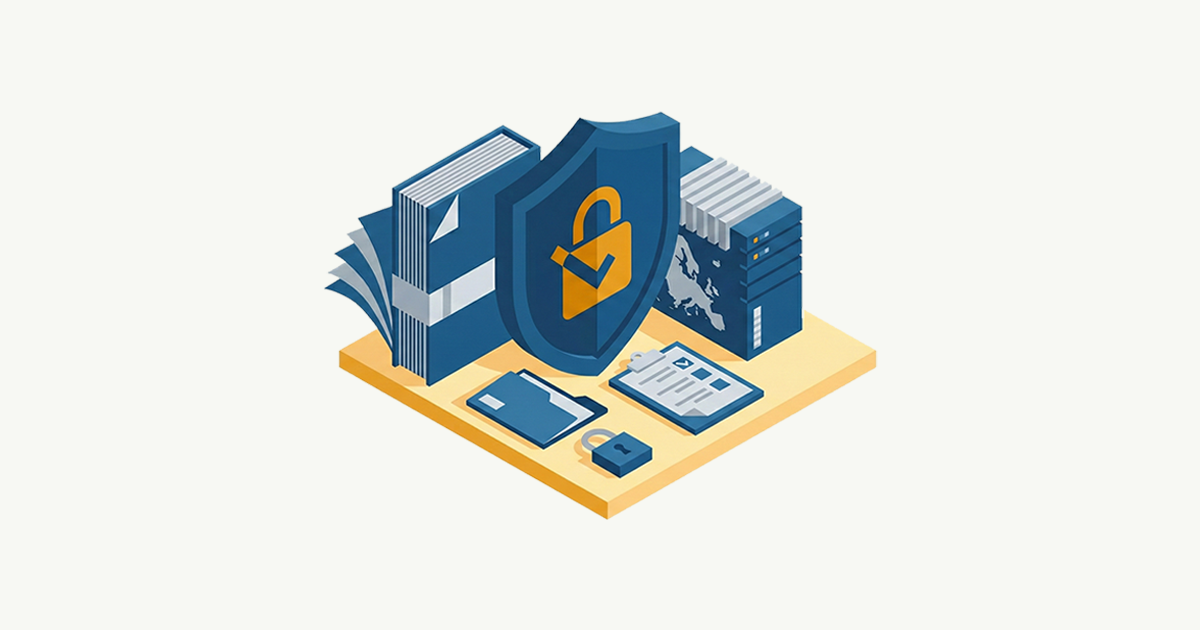
European universities don't just need "GDPR-compliant" survey tools. They need platforms that satisfy institutional procurement, ethics boards, and data governance offices—which increasingly require more than vendor claims.
If you're responsible for research infrastructure at a European university, you've likely noticed the landscape shifting. "GDPR compliant" used to be sufficient. Now procurement offices ask about data sovereignty. Ethics boards want to know about Schrems II implications. Data governance teams require Transfer Impact Assessments for US-based vendors.
This guide provides a practical framework for evaluating survey platforms against the actual requirements European universities face today—not the requirements vendors assume you care about.
TL;DR:
- "GDPR compliant" is necessary but not sufficient. Universities increasingly require EU data sovereignty, not just compliance claims.
- US-based platforms face Schrems II complications. Transfer Impact Assessments are required and often inconclusive.
- The platform landscape divides into three categories: US-headquartered with EU options, EU-headquartered commercial platforms, and open-source self-hosted solutions.
- Evaluation criteria should include: Data residency architecture, corporate jurisdiction, sub-processor locations, DPA availability, and institutional support.
- The hidden cost is administrative burden. Platforms that require extensive compliance documentation cost more than their subscription fees.
→ Lensym: Built in the EU for European Research
The 30-Second Procurement Test
Before detailed evaluation, this quick test identifies which vendors will require extra compliance work.
If the answer is "yes" to any of these, expect a Transfer Impact Assessment and additional review:
- Is the vendor US-headquartered or US-controlled?
- Does any sub-processor sit outside the EEA/UK/adequacy countries (i.e., countries with an EU adequacy decision under GDPR)?
- Does data transit through non-EU infrastructure (support, analytics, email, CDN)?
- Is the DPA gated behind sales contact or an NDA?
- Are backups or telemetry processed globally?
All "no"? → Standard GDPR procurement. Proceed normally.
Any "yes"? → Extended compliance path. Budget 20-40 hours for TIA and documentation. Typical drivers: legal review of SCCs + TIA drafting, mapping sub-processors, documenting supplementary measures, and ethics/procurement justification memos.
Why University Requirements Have Changed
European university procurement for survey tools has evolved significantly since 2020. Understanding why helps evaluate what matters now.
The Schrems II Effect and EU-US Data Privacy Framework
In July 2020, the Court of Justice of the European Union invalidated the EU-US Privacy Shield in Schrems II (Case C-311/18). This ruling found that US surveillance laws are fundamentally incompatible with EU privacy rights.
The 2023 update: In July 2023, the European Commission adopted an adequacy decision for the EU-US Data Privacy Framework (DPF). US companies certified under DPF now have a valid transfer mechanism without requiring SCCs or Transfer Impact Assessments.
However, uncertainty remains:
- Legal challenges to DPF are pending (potential "Schrems III")
- The fundamental concerns about US surveillance that drove Schrems II still exist
- Some institutions maintain precautionary EU-preference policies despite DPF adequacy
- If DPF is invalidated, organizations relying on it face retroactive compliance questions
Practical effect for universities:
- For DPF-certified US vendors, TIAs are technically no longer required
- However, many university data governance offices maintain EU-preference policies as a risk-based approach
- US legal exposure can still apply due to corporate control, even when data sits in EU data centers operated by US subsidiaries
For institutions that want to avoid this uncertainty entirely, EU-native vendors eliminate the transfer question regardless of how the legal landscape evolves.
For a detailed examination of data sovereignty requirements, see our guide on European data sovereignty for university research.
Institutional Policy Evolution
Data governance offices across European universities have responded to Schrems II by updating procurement policies. Common patterns include:
Approved vendor lists that distinguish between "GDPR compliant" and "EU-only processing." Platforms with US parent companies may be excluded regardless of EU hosting claims.
Tiered approval processes where US-based platforms require additional documentation, legal review, or explicit justification that EU alternatives were considered and rejected.
Default EU preference for new procurements, with US-based tools requiring exception approval.
Funding Body Requirements
EU research funding increasingly includes data sovereignty clauses:
- Horizon Europe grants require data management plans addressing GDPR compliance, with reviewers scrutinizing US-based infrastructure
- Some national funding bodies have issued guidance preferring or requiring EU-based research infrastructure for certain project types
- ERC grants require justification for any non-EU data processing
Ethics Board Scrutiny
Institutional Review Boards and Ethics Committees now routinely ask:
- Where exactly will participant data be stored?
- Will data transit through non-EU jurisdictions?
- Is the vendor subject to US legal authority?
Answers requiring caveats ("stored in EU but vendor is US-based") generate additional questions and potential conditions on approval. For a practical GDPR compliance checklist, see our GDPR-compliant surveys guide.
Platform Categories
Survey platforms serving European universities fall into three broad categories. Each has different implications for compliance and administrative burden.
Category 1: US-Headquartered Platforms
Many widely-used survey platforms fall into this category.
Typical characteristics:
- Corporate headquarters in the United States
- EU data center options available (often as upgrades or enterprise features)
- Subject to US legal jurisdiction (CLOUD Act, FISA)
- Standard Contractual Clauses required for GDPR adequacy
- Transfer Impact Assessment required post-Schrems II
What this means for universities:
Even when these platforms offer "EU data residency," the US parent company may remain subject to US legal authority due to corporate control. The CLOUD Act (2018) explicitly authorizes US authorities to compel US companies to produce data stored abroad.
Compliance path: Requires TIA documenting why SCCs provide adequate protection despite US surveillance laws. Many universities find this assessment inconclusive, leading to either:
- Explicit acceptance of residual risk (documented)
- Additional supplementary measures (encryption where only the university holds keys—which breaks most functionality)
- Decision to use EU-native alternatives
Typical administrative burden: High. DPAs may require sales contact. TIAs require legal review. Ethics boards require additional documentation. Procurement requires explicit justification.
Category 2: EU-Headquartered Commercial Platforms
Platforms with EU headquarters avoid CLOUD Act exposure. Some serve specific national markets; others operate EU-wide.
Typical characteristics:
- Corporate headquarters in EU/EEA
- Data processing and storage in EU by default
- Reduces exposure to US extraterritorial access requests (confirm based on ownership + sub-processors)
- Typically no Transfer Impact Assessment required for intra-EU processing
- DPAs often publicly available
What this means for universities:
The sovereignty question has a simpler answer: "Data stays in the EU, processed by an EU company, under EU law." Ethics boards and procurement offices can proceed without extensive legal analysis.
Typical administrative burden: Moderate. Standard GDPR compliance documentation still required, but typically no TIA or Schrems II justification needed.
Category 3: Self-Hosted Open Source
Open-source survey platforms offer self-hosting, where universities run the software on their own infrastructure.
Typical characteristics:
- University controls data location entirely
- No third-party processor (university is both controller and processor)
- Full responsibility for security, updates, and maintenance
- No vendor DPA needed (but internal data protection measures required)
- Maximum control, maximum administrative burden
What this means for universities:
Complete data sovereignty—data never leaves university infrastructure. But this shifts all compliance, security, and maintenance responsibility to the institution.
Typical administrative burden: Highest. Requires IT resources for deployment, maintenance, security patches, backups, and updates. Often underestimated; institutions discover the ongoing cost only after deployment.
Evaluation Framework: What to Ask Any Vendor
Rather than listing features, focus on the questions that determine whether a platform fits university requirements. For each criterion, we include the questions to ask and how to interpret the answers.
1. Corporate Jurisdiction
The question: Is the vendor (or any parent company) subject to US legal authority?
| Answer | Implication |
|---|---|
| No US nexus | Clean sovereignty; typically no TIA required (confirm with your DPO) |
| US parent, EU subsidiary | TIA required; residual CLOUD Act risk |
| US-headquartered | Full TIA required; explicit risk acceptance |
Ask the vendor:
- Where is the company registered? (Not the marketing office—the legal entity)
- Is there a US parent company or subsidiary?
- What legal jurisdiction governs the data processing agreement?
What you want to hear: "We are an EU company with no US corporate relationship."
What requires investigation: "We have EU data centers" (doesn't address corporate jurisdiction).
Ask for evidence: Company registration documents, corporate structure chart, DPA specifying governing jurisdiction.
2. Data Residency Architecture
The question: Where is data processed (not just stored)?
Many platforms store data in EU data centers but process it through US systems first. Processing location determines legal exposure.
| Architecture | Compliance Implication |
|---|---|
| EU-only processing and storage | Clean residency |
| US processing, EU storage | Data touched US jurisdiction; TIA complications |
| Global processing with EU copy | Same issues as above |
Ask the vendor:
- Where is data processed—not just stored?
- Does data transit through non-EU infrastructure at any point?
- Are backups stored in the same jurisdiction as primary data?
- Does customer support have access to personal data, and where are support staff located?
What you want to hear: "Data is processed and stored exclusively in EU infrastructure, with no transit through non-EU systems."
What requires investigation: "We offer EU data residency options" (may mean EU storage after US processing).
Ask for evidence: Architecture diagram or written data flow statement, data residency documentation, support access policy.
3. Sub-Processor Locations
The question: Where are the vendor's sub-processors located?
Vendors use sub-processors for hosting, analytics, support, email delivery, and other functions. If any sub-processor is US-based, data may touch US jurisdiction.
Ask the vendor:
- Can I see your complete sub-processor list?
- For each sub-processor, what jurisdiction are they in?
- For cloud providers, are they using EU-region-only configurations?
What you want to hear: Public sub-processor list with EU-only entities or explicit EU-region specifications.
What requires investigation: "Our sub-processor list is available under NDA" (why the secrecy?).
Ask for evidence: Published sub-processor list with entity names, locations, and purposes.
4. DPA and Compliance Documentation
The question: Is compliance documentation publicly available?
| Availability | What It Indicates |
|---|---|
| Public, downloadable | Transparency; standard process |
| Available on request | Moderate friction; may require negotiation |
| Requires sales contact | Gatekeeping; enterprise-only compliance |
| Not mentioned | Red flag; basic GDPR requirement |
Ask the vendor:
- Is your DPA publicly available?
- Do you have security certifications (ISO 27001, SOC 2)?
- Can you provide documentation suitable for ethics board applications?
What you want to hear: Public DPA, published certifications, documentation templates for academic use.
What requires investigation: "Contact sales for compliance documentation."
Ask for evidence: DPA link, security certification documents, sample ethics board documentation.
5. Research Methodology Support
The question: Does the platform support academic research methods?
This matters beyond compliance—the platform needs to support your research design.
Ask the vendor:
- Does the platform support randomization with data logging?
- Can I implement complex branching logic?
- What export formats are available, and are variable labels preserved?
Key capabilities to verify:
- Randomization: Answer options, question order, block/condition assignment—with logging in exported data
- Branching logic: Complex conditional routing with visual verification
- Question types: Likert scales, semantic differentials, matrices, ranking, constant sum
- Data export: SPSS, Stata, CSV with codebooks; variable labels preserved
- Anonymization: IP logging can be disabled; clear anonymous vs. confidential modes
What you want to hear: Specific answers demonstrating feature depth.
What requires investigation: "We have advanced research features" without specifics.
For a more detailed methodology evaluation framework, see our guide on evaluating survey software for academic research. For anonymization requirements, see our guide on anonymous surveys and GDPR compliance. For a checklist of research-critical features, see academic survey features guide.
Copy/paste vendor questionnaire: The questions above are available as a ready-to-send vendor questionnaire at /trust/vendor-questionnaire.
The Hidden Cost: Administrative Burden
Platform subscription fees are visible costs. Administrative burden is often the larger cost.
For US-Based Platforms
Required activities for compliant use:
- Transfer Impact Assessment: Legal analysis of US surveillance law implications. Requires legal expertise.
- Supplementary measures documentation: What additional protections are in place beyond SCCs.
- Ethics board justification: Why this platform despite EU alternatives.
- Procurement exception documentation: If institutional policy defaults to EU vendors.
- Ongoing monitoring: TIAs should be reviewed as legal landscape evolves.
Estimated administrative time: 20-40 hours per platform evaluation, plus ongoing review. At typical internal legal/procurement rates, that's often several thousand euros of administrative cost per tool—before subscription fees.
For EU-Native Platforms
Required activities:
- Standard GDPR documentation: DPA, privacy notice, data inventory.
- Procurement paperwork: Standard vendor onboarding.
Estimated administrative time: 5-10 hours for initial setup.
The Calculation
A US-based platform with 30+ hours additional compliance work costs more than a slightly more expensive EU-native alternative—even before considering the risk that TIAs may not conclude favorably.
Recommendations by Institution Type
Large Research Universities
Situation: Diverse research needs, established procurement processes, IT capacity.
Recommendation: Consider maintaining multiple approved platforms:
- Enterprise agreement with an established platform for complex, legacy research
- EU-native option for projects where sovereignty is critical
- Self-hosted option for maximum control edge cases
Document when each is appropriate. Let researchers choose based on project requirements.
Smaller Institutions
Situation: Limited procurement resources, fewer IT staff, tighter budgets.
Recommendation: Simplify with EU-native default:
- Single EU-headquartered platform as standard
- Reduces compliance burden across all projects
- Fewer exceptions to manage
The administrative savings from not managing TIAs fund the subscription costs.
Research Groups and Labs
Situation: Operating within institutional constraints but making day-to-day tool choices.
Recommendation: Check institutional approved lists first. If flexibility exists:
- EU-native platforms avoid compliance complications
- Free trials let you test methodology features
- Document your choice rationale for ethics applications
Making the Business Case
If you're advocating for EU-native survey infrastructure at your institution, here are arguments for different stakeholders:
For Procurement/Legal
Cost argument: TIA requirements for US-based platforms create ongoing legal workload. EU-native platforms eliminate this category of work entirely.
Risk argument: TIAs for US platforms often cannot conclusively demonstrate adequate protection. Explicit risk acceptance may be required. EU-native platforms don't require this acceptance.
For Data Governance
Simplification argument: "Data stays in the EU" is auditable and defensible. Complex architectures with US processing and EU storage create ambiguity.
Policy alignment: Post-Schrems II guidance from EDPB supports EU-only processing preference.
For Research Administration
Efficiency argument: Ethics applications proceed faster when data location is unambiguous. Researchers spend less time on compliance documentation, more on research.
Grant compliance: EU funding increasingly scrutinizes data handling. EU-native infrastructure simplifies grant applications and audits.
For Researchers
Speed argument: Faster ethics approval. No TIA delays. Simpler methods sections.
Feature argument: Many EU-native platforms have caught up on methodology features. The "US platforms have better features" assumption is worth testing.
Why We Built Lensym in the EU
Lensym was founded in the Netherlands specifically because we understood what European researchers need: compliant infrastructure without compliance hassle.
EU jurisdiction—clean and simple:
- Company registered in the Netherlands (Aletso)
- Data processed and stored in Frankfurt, Germany
- No US parent company or subsidiary
- Typically no Transfer Impact Assessment required for EU institutions (confirm with your DPO)
Compliance documentation—publicly available:
- DPA downloadable without sales contact
- Sub-processor list publicly available
- Privacy policy specifies EU-only processing
- No compliance features locked behind enterprise pricing
Then the methodology you need:
- Visual graph editor showing entire survey flow
- 6 logical operators for complex branching
- Full randomization with data logging
- 20 question types including matrices with row/column randomization
- IP anonymization enabled by default
Real-time collaboration (Lensync):
- True simultaneous editing—multiple researchers, one survey
- Live presence indicators and cursor tracking
- Role-based permissions (Owner, Admin, Editor, Viewer)
- Version history with full change tracking
Clean data export:
- CSV, Excel with preserved variable labels
- Randomization assignments in your data
- Raw export mode for statistical software
Result: Most EU institutions can onboard Lensym with standard GDPR vendor steps—without a Schrems II exception process.
For European university research, Lensym offers compliance without complication—and methodology without compromise.
Related Reading:
- GDPR-Compliant Surveys: A Practical Guide for Researchers
- European Survey Infrastructure: Data Sovereignty for University Research
- How to Evaluate Survey Software for Academic Research
- Academic Survey Features: What Matters for Scholarly Research
- Anonymous Surveys and GDPR: What Researchers Must Document
- Survey Consent Under GDPR: What Researchers Need to Know
This guide provides information about GDPR considerations for survey platform selection. It is not legal advice. Consult your institution's data protection officer and legal counsel for guidance specific to your situation.
On this page
Continue Reading
More articles you might find interesting
Survey Tools for Academic Research: What Features Actually Matter
A criteria-based framework for academic survey software: features that support rigor (randomization, validation, exports) and those that don't.

Anonymous Surveys and GDPR: What Researchers Must Document
GDPR's definition of anonymity is strict. Requirements for true anonymization, when pseudonymization suffices, and documentation obligations for each.
Real-Time Collaborative Survey Platforms for Research Teams
What research teams need from collaborative survey tools: simultaneous editing, role-based permissions, version control, commenting, and audit trails for multi-investigator academic projects.